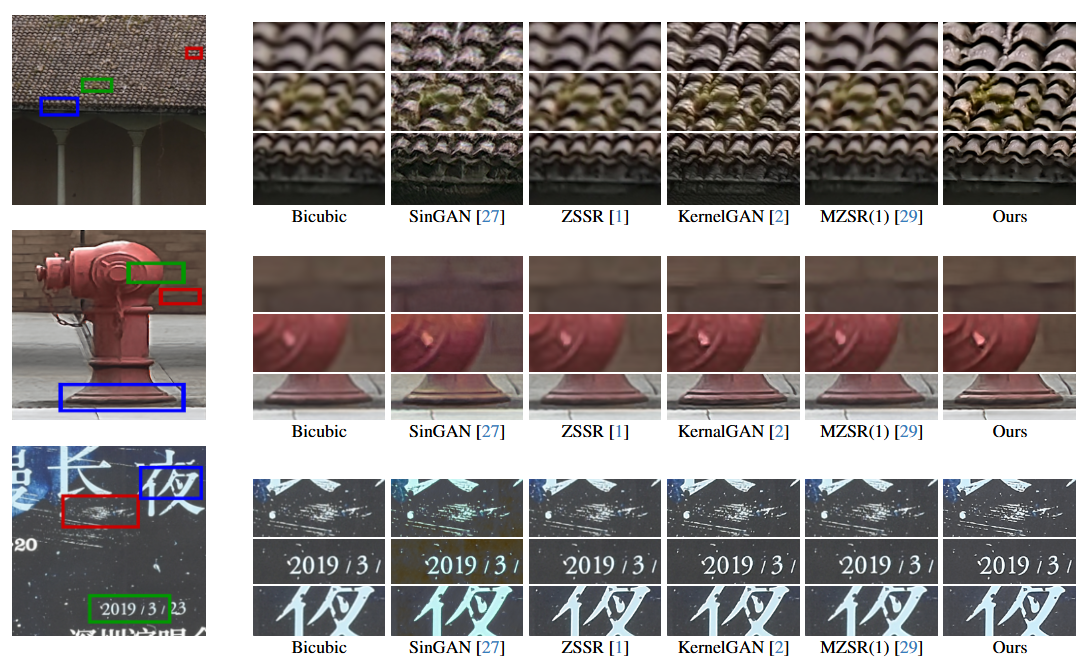
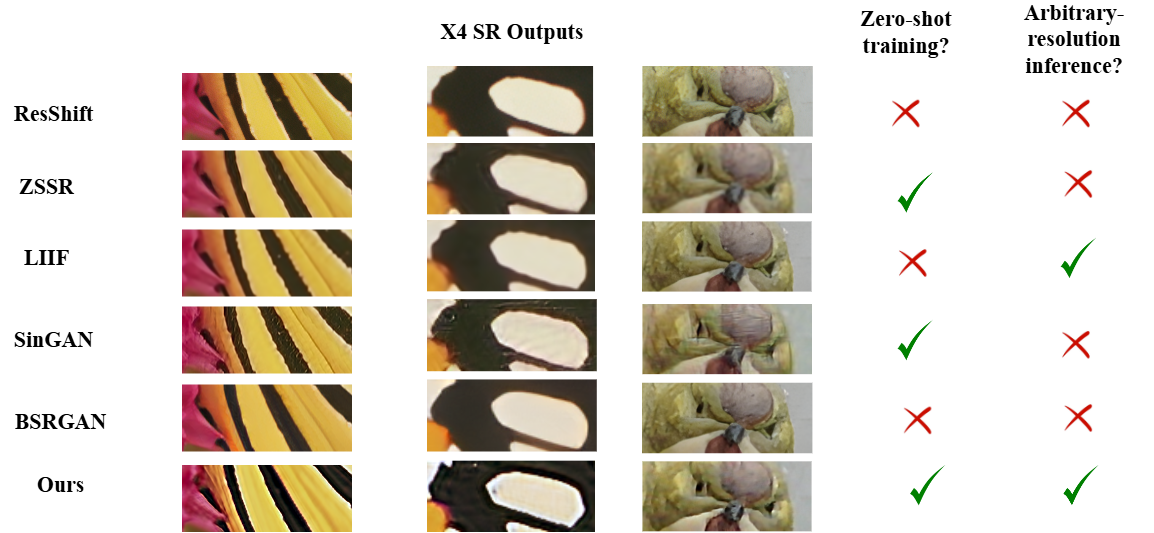
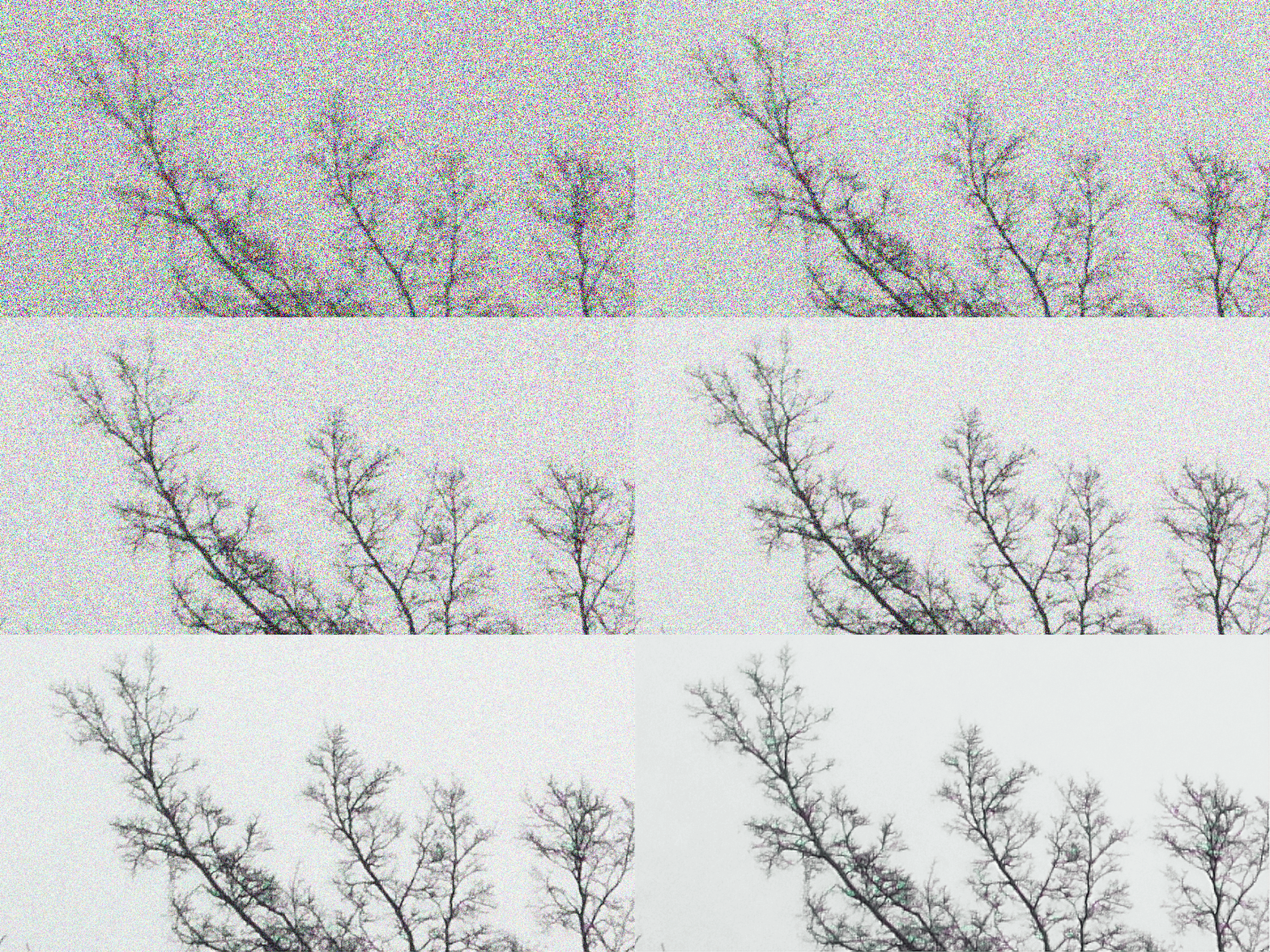
Model Comparison
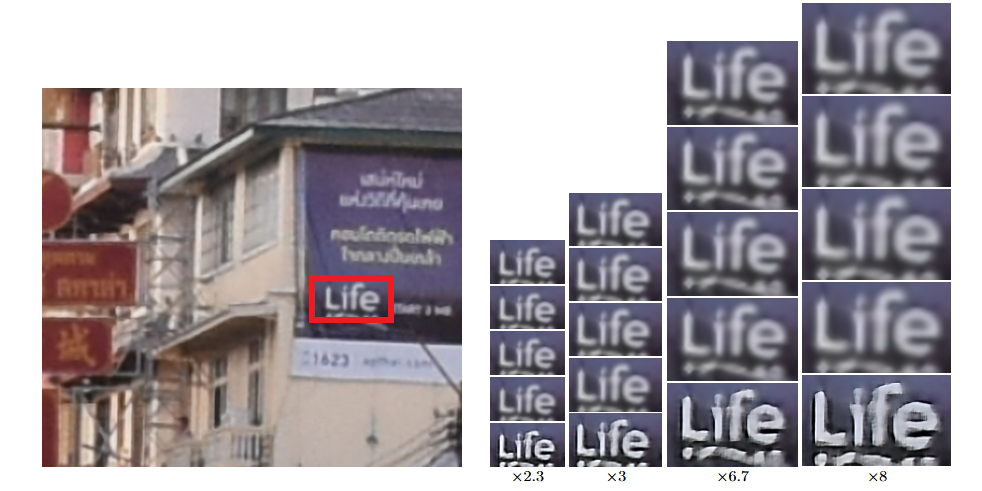
Model Inference
Try it Out




Abstract
Regardless of advancements in supervised super-resolution techniques, the pursuit of generalization often comes at the cost of hallucinations. Moreover, even after days of training on expensive computational resources, these models struggle with images containing degradations outside their training distribution. The rise of self-supervised super-resolution techniques addresses these challenges through internal learning, where the model is trained directly on a single test image. Our approach further overcomes the limitations of existing self-supervised methods by leveraging the diffusion process to achieve high-fidelity reconstructions with enhanced perceptual quality. We first utilize a patch-based training framework to satisfy the data hunger of diffusion models and prevent overfitting. Then, we propose a lightweight ConvNeXt-V2 based UNet for denoising architecture. Additionally, incorporating Discrete Wavelet Transform (DWT) and Fast Fourier Transform (FFT) based combined loss enhances our self-supervised model's emphasis on high-frequency details.
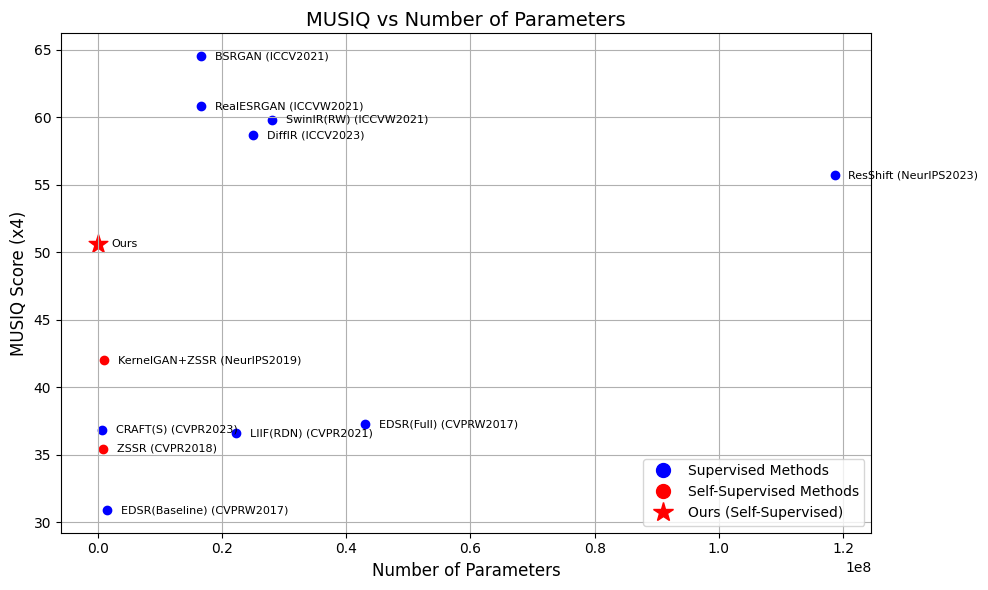
Plot